

Thought for the day – Sunday 7 June

Dear All
It won’t be too much longer I expect, before places of worship will open again for restricted use, ie, private prayer and medication, I mean meditation. As you are aware, no announcements have been made to that effect here in Scotland but in England, church doors will open again in about eight days time.
One positive outcome of several, during this time of lockdown, is the increased, awareness and importance of keeping in touch with one another. Separated families and friends throughout the world have come to realise afresh, just how important our existing technology is in helping to ‘bring us and keep us together’. Even though we cannot be with one another in person as we would like, we can at least still see and hear one another via social media which is somewhat comforting and reassuring.
The temporary closure of our church buildings has I think, re-emphasised the point that the Church, the Ecclesia is ‘people’ and not the buildings themselves. That said, however, we do miss our church buildings and miss not being able to gather together as we are used to.
If throughout the country, church buildings were to open tomorrow but with no one to occupy them, they would be but empty shells. Is it not the presence of people in the buildings that makes them a church. There is a vital, difference between what we understand as the Church proper as opposed to church buildings. Is our main attachment to the buildings or to one another? You might answer and say ‘both’. I would then ask you which could you live without?
Some folk have a great interest in preserving historic buildings and all that comes with them, eg stained glass windows, church furnishings, organs, relics and outmoded traditions etc. The expense of all this, keeping huge buildings to accommodate dwindling congregations is in my view quite unnecessary and outrageous. The National Trust and The National Trust for Scotland can do a better job.
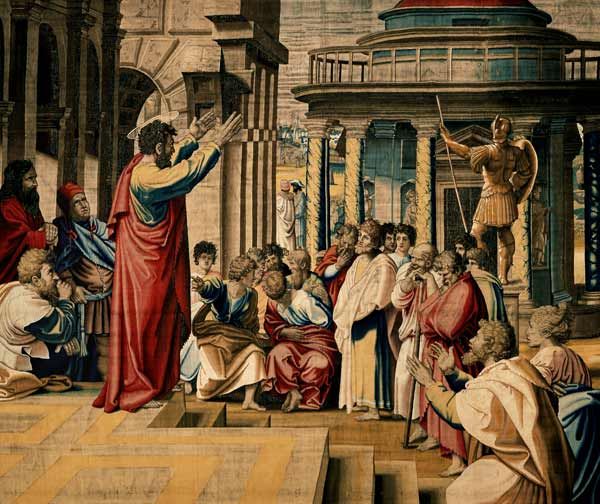
Paul, while in Athens, noticed and commented on many fine temples and discussed and debated them with the local philosophers. He noticed in particular, an inscription to the ‘unknown god’ and chose this as his starting point to explain his beliefs and to spread the Gospel. Paul argued that God did not dwell in man-made buildings.
In view of what Paul said, is it not possible that some buildings we seek to preserve, at all costs, can themselves become our man-made idols?
God does not dwell in man-made constructions however historic, ornate and attractive they may be. It is not that God dwells in anything that exists. It is perhaps everything that exists dwells in God.
Today I ask you to think/meditate on these things.
God bless you!
Jim
JBoag@churchofscotland.org.uk
ACTS 17: 22-28
Paul then stood up in the meeting of the Areopagus and said: “People of Athens! I see that in every way you are very religious. For as I walked around and looked carefully at your objects of worship, I even found an altar with this inscription: to an unknown god. So you are ignorant of the very thing you worship—and this is what I am going to proclaim to you.
“The God who made the world and everything in it is the Lord of heaven and earth and does not live in temples built by human hands. And he is not served by human hands, as if he needed anything. Rather, he himself gives everyone life and breath and everything else. From one man he made all the nations, that they should inhabit the whole earth; and he marked out their appointed times in history and the boundaries of their lands. God did this so that they would seek him and perhaps reach out for him and find him, though he is not far from any one of us. ‘For in him we live and move and have our being.’ As some of your own poets have said, ‘We are his offspring.’
Recommended Posts
Thought for the day – Sunday 21 June
June 21, 2020

Thought for the day – Saturday 20 June
June 20, 2020
Thought for the day – Wednesday 17 June
June 17, 2020