

Thought for the day – Thursday 14 May

Dear All
Who is it that decides whether a question is either good or bad? Listening to and taking part in general conversations you often hear someone use the phrase, ‘that’s a good question’. We all know what’s meant by that, but isn’t it a little condescending? I think it is a bit. After all, what’s the purpose of any question? Surely at its most basic, it’s the means of acquiring information. It is, therefore, in my view, for the ‘questioner’ to decide for him or herself whether a question is either good or bad. If someone finds the answer to their query then it’s a good one, and if not it probably wasn’t. I know this ‘reasoning’ is a little simplistic and not exact but I’m sure you get my drift.
Questions can be at times very awkward, embarrassing, challenging, difficult and sometimes clearly unanswerable. That is a fact. Although some questions may be unanswerable at one point in time it doesn’t, of course, mean, that they will always remain so. New discoveries are made every day and what was unanswerable in one age is answerable in another.
It was thought and taught by the church in the 1600s that the sun orbited the earth and that the earth was the immovable centre of the universe, and that anyone who questioned this was a heretic. Some ‘heretics’ did.
Galileo who did question this teaching of the church was tried in 1633 by the inquisition and in a ‘form of words’ had to ‘change his tune’ to ‘satisfy’ his inquisitors. He did this by saying that his findings were ‘matters for scientific discussion’ rather than his actual belief, he really did believe, however, that he was correct and the church was wrong, and so it proved to be. The earth orbits the sun and the earth is definitely not the centre of the universe.
To question and challenge the teachings of the Church was not only forbidden, it was heretical. Freedom and thought contrary to orthodox catholicity could not and would not be tolerated. The ‘mother Church’ with its emphasis on scripture and tradition together, each holding equal weight, would decide what was good or bad. Galileo’s views were deemed heretical and he would not go unpunished. He was placed under house arrest to reflect on the ‘errors of his ways’.
We all know the saying ‘ask a stupid question and you’ll get a stupid answer’, well maybe there is a little truth in it but it brings us back to the original question, who decides what is silly or otherwise?
Reading the bible was at one time in the church’s history, a privilege only for the educated few, only for those qualified ie, the clergy and those approved by the church eg, monks, readers etc The bible was not available. To question the Church and its interpretation of scripture could, and usually did, mean that you’d be ‘barbecued’ in the public square. They had a lot of barbecues in those days. The heretics, although they were there, didn’t like it.
More recently, July 1925 in Dayton Tennessee, Charles Darwin’s scientific discoveries and writings about the origin of the species caused a similar stir and culminated in the famous ‘Scope Monkey Trial’ as it became known where The State of Tennessee versus John Thomas Scopes took place. The issue in contention was about the teachings of evolution in State schools which at that time was deemed to be unbiblical in the views of fundamentalist Christians. Scopes was found guilty.
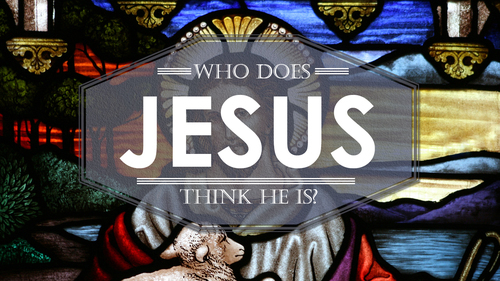
Jesus often challenged the religious authorities of his day with his teachings about God and his kingdom. Many people loved what he said and did, but many others didn’t. To those who didn’t like his ‘new style’ preaching and teaching he was an upstart who caused them so much ‘trouble’. So much, in fact, that it cost him his life. Jesus always said that he never came to abolish the all-important law but rather to fulfil it, but the authorities just didn’t see it that way. Jesus was to them, an unorthodox blaspheming heretic and not a credible teacher at all.
One can almost hear them now saying something like: ”who does this guy think he is? He’s got no education to speak of, he breaks all the rules, he’s friendly with the local riff-raff, he mixes with tax collectors and even talks to Samaritans, women Samaritans at that. He even tells stories about good Samaritans and talks about us religious folk as being bad people. Not only that he comes from around these parts, his brothers and sisters, his mother too all live locally. He’s an imposter! He’s got to be an imposter.
Part of the problem for those who heard Jesus was not just what he said but because he lived locally, these two things combined didn’t go down well at all and so he was rejected. Sometimes our fixed ideas and traditions are challenged and might even upset at times. Should we pay heed to others’ point of view.?
I’ll let you make up your mind. Is it a good question?
Today I ask you to think/meditate on these things.
God bless you!
Jim
MATTHEW 13: 53-58
When Jesus had finished these parables, he moved on from there. Coming to his hometown, he began teaching the people in their synagogue, and they were amazed. “Where did this man get this wisdom and these miraculous powers?” they asked.“Isn’t this the carpenter’s son? Isn’t his mother’s name Mary, and aren’t his brothers James, Joseph, Simon and Judas? Aren’t all his sisters with us? Where then did this man get all these things?”And they took offence at him. But Jesus said to them, “A prophet is not without honour except in his own town and in his own home.”
And he did not do many miracles there because of their lack of faith.
Recommended Posts
Thought for the day – Sunday 21 June
June 21, 2020

Thought for the day – Saturday 20 June
June 20, 2020
Thought for the day – Wednesday 17 June
June 17, 2020
This website uses cookies to improve your experience. We'll assume you're ok with this, but you can opt-out if you wish.Accept Read More
Privacy & Cookies Policy
Privacy Overview
This website uses cookies to improve your experience while you navigate through the website. Out of these, the cookies that are categorized as necessary are stored on your browser as they are essential for the working of basic functionalities of the website. We also use third-party cookies that help us analyze and understand how you use this website. These cookies will be stored in your browser only with your consent. You also have the option to opt-out of these cookies. But opting out of some of these cookies may affect your browsing experience.
Necessary cookies are absolutely essential for the website to function properly. This category only includes cookies that ensures basic functionalities and security features of the website. These cookies do not store any personal information.
Any cookies that may not be particularly necessary for the website to function and is used specifically to collect user personal data via analytics, ads, other embedded contents are termed as non-necessary cookies. It is mandatory to procure user consent prior to running these cookies on your website.